

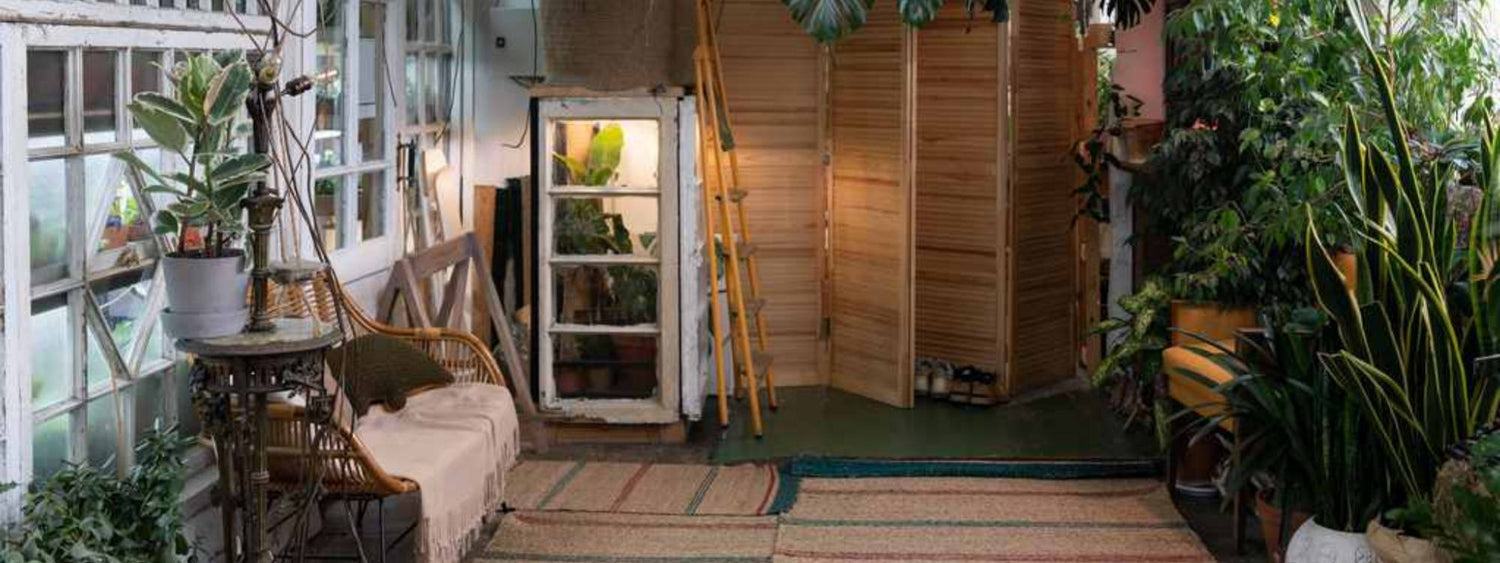
When I was still living in an apartment, my next-door neighbor had a living room that faced south with a big wall of floor-to-ceiling windows. She'd turned the whole window area into a lush herb garden—pots on the floor, pots on shelves, pots hanging from tension rods. I didn't have the sense to save the photos, but I still remember sitting by that window, surrounded by containers of every shape, the whole room filled with the scent of basil and rosemary. That moment lodged itself in my brain.
When I eventually moved into a house, herbs were the first thing I brought in. They've been regulars on my balcony and in my kitchen ever since.
Some of my most productive herb gardens have been on balconies, windowsills, and a weird narrow walkway on the side of the house that nobody else wanted. Small spaces force creativity. And herbs, bless them, are perfectly happy to play along.
Vertical Gardening: Go Up, Not Out
When floor space is limited, walls are your new best friend. And Pinterest and Instagram have made vertical gardening a goldmine of ideas—some practical, some ambitious, almost all of them fun to scroll through on a winter evening.
Here are the approaches worth trying, from simple to slightly more involved:
The Open-Shelf Wall. The easiest way to go vertical: mount floating shelves on a sunny wall and line them with small pots. One shelf for basil and parsley, another for thyme and oregano. You can rearrange whenever you feel like a refresh, and there's zero construction required beyond hanging the shelves.
The Hanging Pot Grid. A trellis, a wire grid, or even a repurposed wooden pallet leaned against a wall—attach small pots with S-hooks and suddenly you've got a living wall. This is perfect for trailing herbs and compact varieties. One tip: if you're renting or don't want to drill into walls, look for a freestanding trellis you can lean.
The Herb Spiral Tower. This one looks more ambitious than it is. The idea is simple: arrange bricks or stones in a spiral shape that rises toward the center, fill it with soil, and plant. Mediterranean herbs like rosemary and thyme go up top where drainage is sharpest; moisture-loving basil and parsley sit lower. Water flows down, and each plant gets the conditions it actually wants. It's like a tiny ecosystem in a 3-foot circle.
The Ladder Garden. An old wooden step ladder—the kind you might find at a garage sale—becomes a tiered display in minutes. Set pots on each rung, or hang them with S-hooks. No mounting needed; just lean it against a wall. The staggered height means every plant gets light, and harvesting is a breeze.
The Unexpected Wall-Mounted Find. Some of the best vertical herb gardens I've seen use objects nobody expected: a hanging file organizer with pockets filled with soil, a row of repurposed ammo cans on a chain, or wall-mounted mason jars with herbs growing in water. These are the ones that make people stop mid-conversation and ask how you did it.
Things to watch for with vertical setups:
Drainage is priority number one. Water always runs down. Place thirstier herbs at the bottom and drought-tolerant ones up top. Make sure every pot or pocket has a drainage hole, and put a drip tray at the bottom tier to catch runoff unless you enjoy mystery puddles on your floor or patio.
Weight adds up fast. Wet soil is surprisingly heavy. If you're mounting anything on a wall, make sure the brackets are anchored properly. For balconies, keep in mind there may be weight limits.
Light access isn't equal across a vertical setup. Taller tiers can shade the lower ones. Position the setup so the sun hits as many levels as possible, and rotate pots occasionally.

Container Gardening: Think Beyond the Terracotta Pot
Terracotta is a classic for a reason—it's cheap, breathable, and looks good doing its job. But different container materials behave differently, and matching the material to the herb makes a real difference.
Terracotta and clay: Porous and airy, which means soil dries out faster. Perfect for Mediterranean herbs like rosemary, thyme, oregano, and sage—plants that actively dislike having wet feet. The trade-off: they're heavy, breakable, and in freezing winters they can crack.
Plastic: Lightweight, cheap, and excellent at retaining moisture. Great for basil, parsley, cilantro, and chives—herbs that want more consistent water. Also a smart choice for hanging setups where weight matters. The downside: plastic can degrade in full sun over time, and some gardeners worry about chemicals leaching. If that's on your mind, look for food-safe or BPA-free options.
Glazed ceramic: Beautiful, holds moisture better than terracotta, and comes in colors that make a design statement. Great for indoor or covered patio setups. But they're heavy, and cheaper ones can be prone to cracking in cold weather.
Fabric grow bags: Lightweight, breathable, and nearly impossible to overwater—roots get constant airflow. They're great for root herbs and small vegetables, and they fold up flat for winter storage. The downside: they dry out very fast, so you'll be watering more often. Also, they don't win any beauty contests.
Metal: Durable, modern, and often used for raised beds in urban gardens. Galvanized steel lasts for years. But small metal pots can heat up dangerously fast in direct sun—enough soil in a large trough insulates the roots, but a tiny metal pail is a different story. For herbs, stick to larger metal containers or keep them in partial shade.
My rule of thumb: Group containers by water needs. If your rosemary and your basil share a watering schedule, one of them is going to be miserable. Put the thirsty herbs together and the drought-lovers together, and you've just eliminated your most common container headache.
DIY Planters: Give Things a Second Life
Some of my favorite planters started as things heading for the trash. There's something deeply satisfying about turning a discarded object into a home for something green. It's not about being cheap (though that's a nice bonus). It's about looking at ordinary things and thinking, that could work.
A few ideas to get you started:
Tin cans: Clean thoroughly, smooth any sharp edges, punch drainage holes, and you've got instant rustic herb pots. Paint the outside or wrap with twine for a finished look.
Glass jars: Mason jars, pasta sauce jars, even old jam jars. Fill the bottom with pebbles for drainage. Great for growing herbs in water—basil, mint, and oregano will root in a jar on a sunny windowsill.
Plastic bottles: Cut in half and use the bottom as a standard pot. Or flip the top into the bottom to create a self-watering planter. Paint or wrap the outside to block light from reaching the roots.
Wooden pallets and crates: An old crate lined with landscape fabric becomes an instant herb bed. A pallet stood upright with pots tucked between the slats makes a free vertical garden.
An old dresser: Pull the drawers out partway, line them, fill with soil, and plant. It sounds odd until you see one on a patio, and then it's the most charming thing in the garden.
Mason jars, tea tins, colanders, even an old colander with built-in drainage. The only real rule: anything that held chemicals or anything you're unsure about should get a thorough scrub before it goes near your herbs.
A few important notes with DIY planters:
Always have drainage holes. If the container is precious and you don't want to drill it, use it as a cachepot—put a nursery pot inside and take it out for watering.
If you're painting or decorating the outside, use non-toxic paints.
For wooden containers, line the inside with landscape fabric or a plastic liner to protect the wood from constant moisture.
Label everything. When you have six repurposed jars with mystery seedlings, you'll thank yourself.

Small Space, Big Harvest
Here's what I've come to believe after years of growing herbs in spaces that were never "supposed" to be gardens: limitations are where creativity lives.
Some of the smartest herb gardens I've ever seen were born from constraints—a windowsill that was the only sunny spot, a balcony barely big enough for abench. The people who made those gardens weren't waiting for the perfect yard or the ideal setup. They looked at what they had and asked, "What can I grow here?"
A lot of great ideas come from that question. And a lot of them start with things that were about to be thrown away—a tin can, an old ladder, a plastic bottle. There's a certain kind of value in refusing to waste things, in giving objects a second act as something that holds soil and grows food.
Gardening isn't a demanding hobby. It meets you where you are. A single pot on a windowsill counts. Three pots on a fire escape counts. A repurposed dresser on a tiny balcony counts. You don't need permission, and you don't need acreage. You just need to want fresh herbs within arm's reach—and the willingness to look around and see what's possible.
You may also enjoy these related blogs:
From Kitchen to Garden: A Beginner's Guide to Growing Your Own Herbs for Home Cooking
5 Herbs That Are Nearly Impossible to Kill (Even if You're a Forgetful Gardener)
Raised Bed Garden Planning: Size, Height, and Layout — Explained Simply


Leave a comment
This site is protected by hCaptcha and the hCaptcha Privacy Policy and Terms of Service apply.