

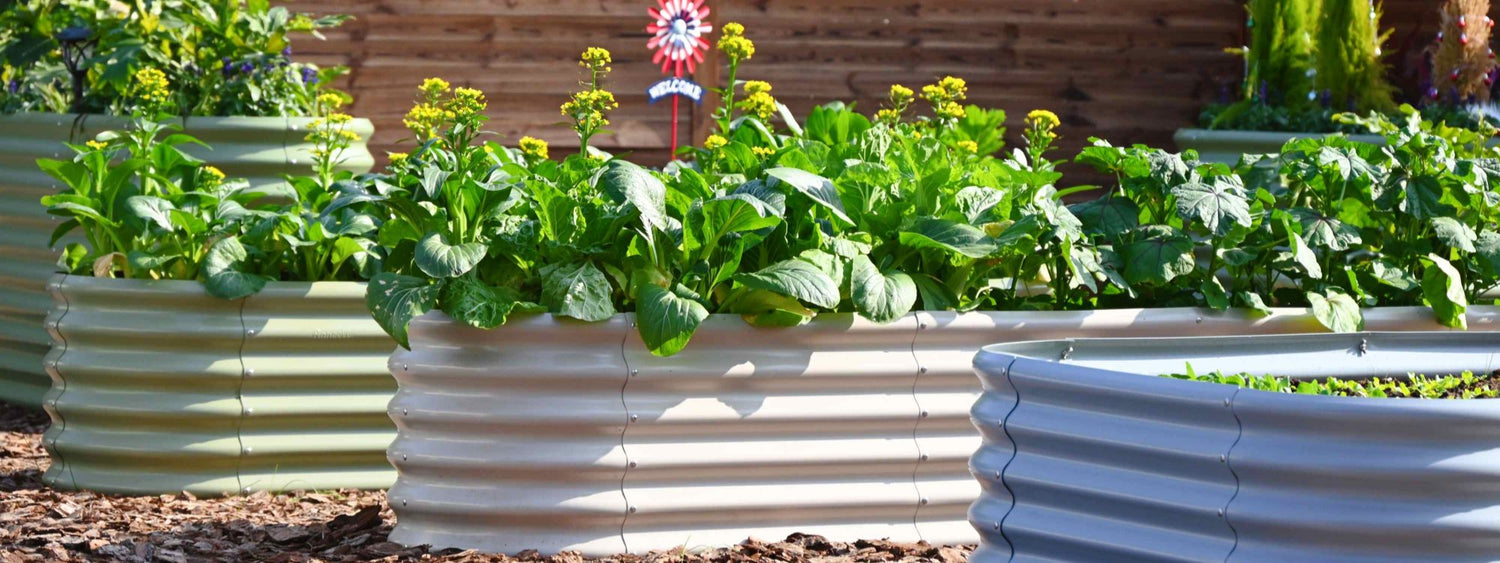
Raised garden beds have a reputation for being the solution.
Better soil control. Fewer weeds. A longer growing season. And yes—often, they really are. But somewhere along the way, raised beds also became… complicated—especially for new gardeners. Too many size charts. Too many "ideal" layouts. Too many opinions. So let's slow it down. If you're planning a raised bed garden—especially in January, when everything still lives on paper—there are really just four decisions that matter: width, length, height, and layout. (There is one more—material—but I'll save that debate for the next post.)
If I had to sum up everything I've learned in one sentence, it would be this:
Not what looks impressive. What actually works for you.

1. Width: Reach Matters
Unless you're going fully custom, most raised garden beds on the market fall somewhere between 2 and 4 feet wide. And honestly? That range exists for a reason. Anything wider than 4 feet starts to create a problem—not for the plants, but for you.
Four feet is roughly the distance most people can comfortably reach once their arms are fully extended. That means if your bed is wider than that, the center becomes hard to tend without stepping into the soil. This is also why a 4-foot-wide bed should never be pushed up against a fence or wall. One side instantly becomes unreachable, and that side will slowly turn into the place weeds go to thrive. A 2-foot-wide bed, on the other hand, is much more forgiving. It works well along fences, walls, or narrow side yards, and you can reach everything from one side without effort. This thinking is reflected in how Annoell designs its raised garden beds. The modular panels can be assembled into either a 4-foot-wide configuration—ideal for beds you can access from both sides—or a 2-foot-wide configuration, which works better along walls, fences, or tighter spaces.
2. Length: Just Because You Can, Doesn't Mean You Should
Length is usually the most flexible dimension.
As long as your yard allows for it, a raised bed can be as long as you want. Once the width is set, length is really what determines how much growing space you have. I've seen raised beds stretch all the way to 12 feet long, especially in larger yards.
Personally? I'm not a big fan of very long beds. They remind me of a really long sentence with no commas—you can read it, but by the end, you're a little tired and wondering why it couldn't have been broken up. Long beds can feel overwhelming, harder to manage evenly, and less adaptable if your needs change later. Shorter beds feel more modular. Easier to adjust. Easier to rework. Importantly, easier to walk away from—and come back to. There's no universal "right" length here. It's always a balance between productivity and how much you can realistically keep up with.
Just remember: If a bed already feels long while you're planning it, it will feel even longer in midsummer.
3. Height: This Is About Plants and Your Body
Raised bed height is one of those decisions that depends on two things at once: what you're growing—and how your body feels while growing it.
Available heights range widely, from 6 inches all the way up to 32 inches, whether you're buying standard sizes or going custom.
From my experience:
Around 1 foot high is enough for most vegetables.
If you're mainly growing salad greens, herbs, or shallow-rooted crops, this height works beautifully—and keeps soil costs reasonable.
1.5 feet (18 inches) has become increasingly popular, and for good reason.
Crops like tomatoes, squash, and zucchini benefit from the extra root space, and for anyone with back or knee issues, this height noticeably reduces bending and squatting.
Anything above 1.5 feet starts to shift toward standing or seated gardening.
These taller beds are especially helpful for gardeners who prefer to work upright or need wheelchair access. Yes, they require more soil and more upfront effort—but once they're set up, they're a classic case of short-term effort, long-term comfort.
If there's one place where "future you" deserves a vote, it's here.
One small but practical note:
If you have pets—or frequent uninvited visitors like rabbits or raccoons—taller beds can offer an extra layer of protection for your plants.
4. Layout: Design for Plants and for gardening activity
Layout decisions really live at the intersection of two needs: what plants require, and how humans actually garden.
From the plant side:
Plants need sun and water—both equally non-negotiable. Warm-season crops belong in the sunniest spots. Taller plants shouldn't block shorter, sun-loving ones. I once placed a whole set of beds far from the water source just to chase better sunlight—and let me tell you, dragging hoses across the yard all season was not the victory I imagined.
Sun matters. But so does water access. Layout planning gets tricky because we're never starting from a blank canvas. We're always working with what we already have—the yard's orientation, the slope, the water source, the path that can't be moved.
From the human side (the part we often ignore):
A good layout should make it easy to walk away—and easy to come back.
The best garden layouts don't just maximize planting space. They maximize use.
Can I move through this space easily?
Is there room to stand, kneel, pause, or set something down?
A few layout choices that quietly change everything:
Leave wider paths than you think you need
Especially if you'll be hauling soil, using watering cans, pushing a cart, or gardening with kids underfoot.
Avoid corner crowding
If a bed is awkward to reach, it will be neglected. It is true.
Think in zones, not symmetry
Herbs near the kitchen. Daily harvest beds close by. Experimental beds further out.
A good layout makes it easy to step outside for five minutes. And those five minutes are what keep a garden alive long-term.
Start Smaller—and Leave Room to Grow
Here's something most gardeners learn the hard way: A garden that looks manageable on paper can feel very different in July. When planning your layout, start smaller than you think you need—and leave space for future changes. Extra beds. Expanded irrigation. A compost system you haven't fallen in love with yet.
Planning mindset:
Design for the version of yourself who's tired, busy, and still showing up—not your most energetic weekend self.
Gardens evolve. The best layouts expect that—and make room for it.

Raised bed planning doesn't need to be perfect. It just needs to make sense for your space, your body, and your everyday life.
Start with what feels manageable. Leave room for change. And trust that you'll learn more by gardening than by planning.


Leave a comment
This site is protected by hCaptcha and the hCaptcha Privacy Policy and Terms of Service apply.