

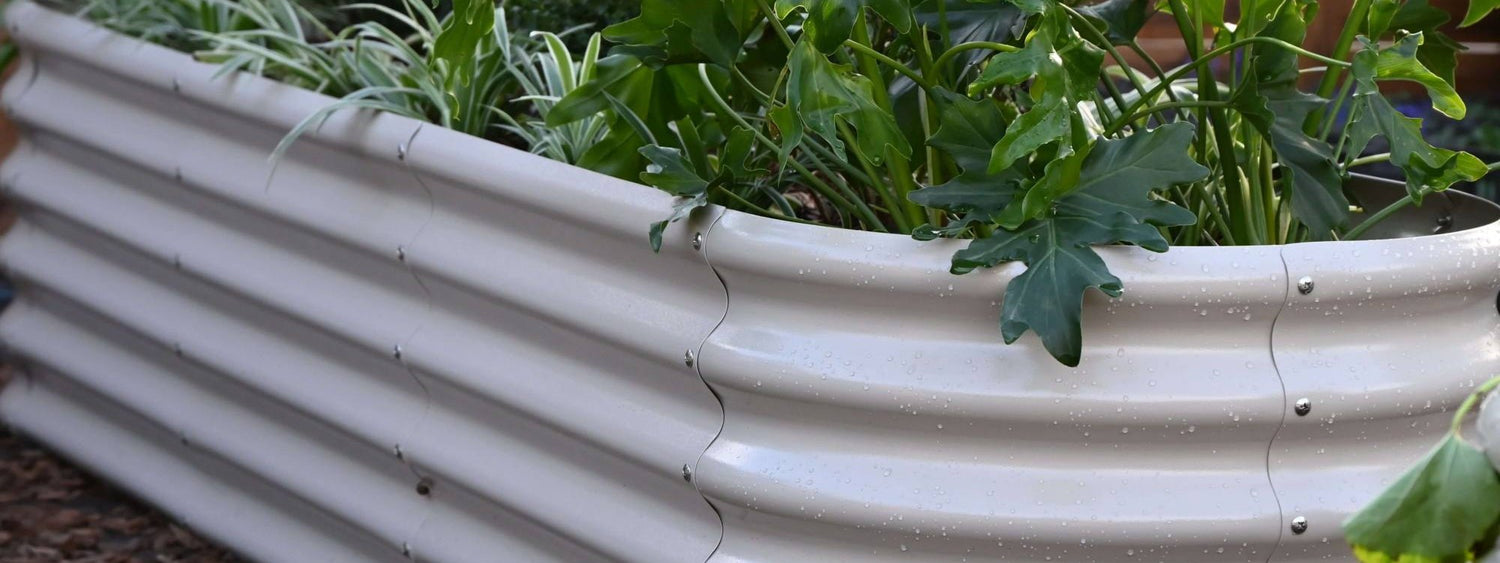
Metal raised beds are everywhere now. What started as a niche alternative to wood has become one of the most common sights in backyard gardens—and every year, more brands enter the market with new models, new coatings, new claims. It's getting harder, not easier, to know what to expect from the metal bed you bring home.
Most people choose metal for one reason: longevity. The promise is a bed that lasts for years, maybe decades, without the rot and replacement cycle that comes with wood. But once the bed is filled and planted, the real question surfaces quietly: does it actually hold up? What does "long-lasting" look like in practice, season after season?
I've been growing in galvanized steel raised beds for years. This article is my attempt to answer those questions from actual experience—not from a spec sheet, but from the beds sitting in my backyard right now. We'll cover the hot topics, the simple maintenance routines, and the small things that make a real difference over time.
A quick note on scope. This article is about galvanized steel raised beds with open bottoms, sitting directly on the ground, mainly used for outdoor gardening. It does not cover Corten steel beds, nor sealed-bottom metal containers. The reason is simple: different metal materials and different constructions behave differently enough that mixing them together creates more confusion than clarity. By focusing on galvanized steel—by far the most common type in backyards today—we can be specific about what actually matters.

The Hot Topics: Probably Less Dramatic Than You've Heard
Will the soil overheat?
Metal conducts heat. Panels facing direct afternoon sun get hot to the touch—that's just the nature of the material. But the soil inside the bedis much cooler than the panel surface.Because soil is aneffective insulator, and metal dissipates heat quickly into the air rather than steadily conducting it deep into the root zone.
While the outer inch or two of soil near the edges may be slightly warmer on hot days, the interior soil temperatureis most likely toremain well within the range vegetables can handle.
In cooler northern climates, the warmth metal absorbs is actually a useful trait—bed soil warms up earlier in spring, and you can start planting sooner.
Is it going to rust over time?
Under normal garden conditions, a high-quality galvanized steel bed can go many years without meaningful rust. The zinc coating is designed to protect the steel underneath by oxidizing first—it is, by definition, sacrificial. When the coating is eventually depleted in a spot, the steel beneath begins to rust.
How long that process takes depends on the coating quality, the soil conditions, and how the bed is maintained. Higher-quality galvanized beds use coatings that include aluminum and magnesium alongside zinc. The aluminum adds durability. The magnesium creates a mild self-healing effect—when the surface gets scratched, magnesium reacts with moisture and forms a thin protective film over the exposed area.
The main factors affecting galvanized steel in soil are chlorides, moisture content, and pH. In average residential garden soil, the estimated service life is measured in decades, not years.
Is anything leaching into the soil?
For galvanized steel beds made with food-grade coatings by reputable manufacturers, the short answer is: nothing at levels that matter. Under normal garden soil conditions—pH between 6.0 and 7.5—zinc is barely mobile, and it happens to be a micronutrient plants actually need. Aluminum only becomes soluble in extremely acidic soils well below the range vegetables can grow in. If you're concerned, two things help: test your soil pH once a year to make sure it stays in a reasonable range, and choose beds from companies that use food-safe, tested coatings.
Two Things to Avoid From Day One
Before we get into maintenance routines, there are two common mistakes that do more damage than years of weather. Both are easy to avoid once you're aware of them.
1.Sharp metal scraping against the panels.
Dragging a shovel, a hoe, or a wheelbarrow along the side of your bed can leave deep scratches that cut through the protective coating. Once the coating is breached, moisture works its way in. To avoid this, just need to be mindful when working around the bed. Keep tools with sharp edges away from the metal and once there is a deep scratch, dab a little touch-up paint on the scratch.
2.Uneven or sloped ground.
A galvanized steel bed is designed to sit on flat, level ground. When one corner settles into a low spot or the whole bed tilts, stress concentrates at the corners and seams—exactly where fasteners are holding everything together. That stress can slowly loosen screws, twist panels, and create gaps where water collects. The best fix is prevention: take the extra time to level the ground before you fill the bed. If your bed is already in place and has settled unevenly, the most reliable solution is to empty the bed, re-level the ground, and refill—a chore, but one you'll only need to do once.
Annual Maintenance: The Once-a-Year Checkup
Once or twice a year, do a slightly deeper check. Fall is the best season for most of this—the weather is dry, the temperature is moderate, and the bed is usually less crowded with plants. Spring works too. Winter is not ideal for touch-up painting because cold temperatures slow drying and reduce paint adhesion.
Structural check. Walk around the bed and look at every corner, every screw, every seam. Give the panels a gentle push. Anything feel loose? Any screws backing out? A small wobble now becomes a bigger problem later, especially after a winter of freeze-thaw cycles working things loose. Tighten what needs tightening until it feels snug but not forced.
Rust spot treatment. Look closely at screw holes, seams, and anywhere panels join. These are where rust tends to show up first. If you find spots of surface rust, here's the routine: clean the area with a stiff brush or fine sandpaper to remove loose rust, wipe away dust and debris, and apply a zinc-rich touch-up paint made for galvanized metal. Let it dry completely—pick a dry day for this, not a damp morning.
For beds with zinc-aluminum-magnesium coatings, small scratches often don't need treatment because the magnesium in the coating provides a self-healing effect. But deeper scratches that reveal bare steel should still get a dab of touch-up paint. The self-healing has limits.
Soil pH check. A simple home test kit is enough. Most vegetables are happy between 6.0 and 7.0, which is also the range where your galvanized coating stays stable. If your soil has drifted acidic, add garden lime gradually over the season.
Panel cleaning. A garden hose and a stiff brush remove caked-on dirt, algae, and moss. Clean panels make it easier to spot new scratches or rust, which is half the point.

What's Different About Soil in a Metal Bed
The edges are hotter. They're also drier.
The metal panels absorb heat, and the soil directly against them warms up faster than soil in the middle of the bed. This also means the edges dry out faster.
What to do about it: plant heat-tolerant herbs along the edges—rosemary, thyme, oregano. They don't mind the extra warmth. Keep moisture-sensitive plants like lettuce and spinach toward the center, away from the metal. When you water, make a deliberate pass along the inside perimeter. The edge soil is the first to dry out and the most often missed.
What about the bottom? Do I need a liner?
For an open-bottom galvanized raised bed sitting directly on the ground, most situations don't require anything underneath. The open bottom is part of the design—roots can reach down into native soil, worms can move up and down, drainage happens naturally.
There are a few situations where adding something makes sense, but each one calls for a different material:
Weed and grass suppression underneath? A layer of plain cardboard or a single layer of landscape fabric works. Both block light well enough to smother grass and weeds below, and both degrade slowly over time.
Burrowing pests like voles or gophers? Hardware cloth—a metal mesh with small openings—secured across the bottom and attached to the lower edges of the bed. This creates a physical barrier that pests can't chew through while keeping the bottom open for drainage and deep-rooted crops.
Contaminated native soil? This is a different situation entirely. If you have reason to believe the ground underneath is contaminated, an open-bottom raised bed is not the right tool. You'd need a fully sealed, closed-bottom container system or to address the contamination first. A bottom liner won't provide meaningful protection in this scenario.
For most backyards, the answer is: no liner needed.
A galvanized steel raised bed isn't zero-maintenance. But the maintenance it does need is light, seasonal, and mostly common sense. Tighten a screw here. Touch up a scratch there. Keep an eye on the edges in the heat.
Do those things, and a good galvanized bed will quietly earn its place in your garden for a long time. The beds I started with are still out there, holding soil, growing food. They've earned some scratches. A few touched-up spots. They look worked. They look loved.
You may also enjoy these related blogs:
The Complete Beginner's Guide to Raised Garden Beds:Size, Soil & Setup
Metal Raised Garden Beds: The Ultimate Guide to Materials and Durability
Wood vs. Metal Raised Garden Beds-Choosing the Material That Actually Fits Your Garden


Leave a comment
This site is protected by hCaptcha and the hCaptcha Privacy Policy and Terms of Service apply.