

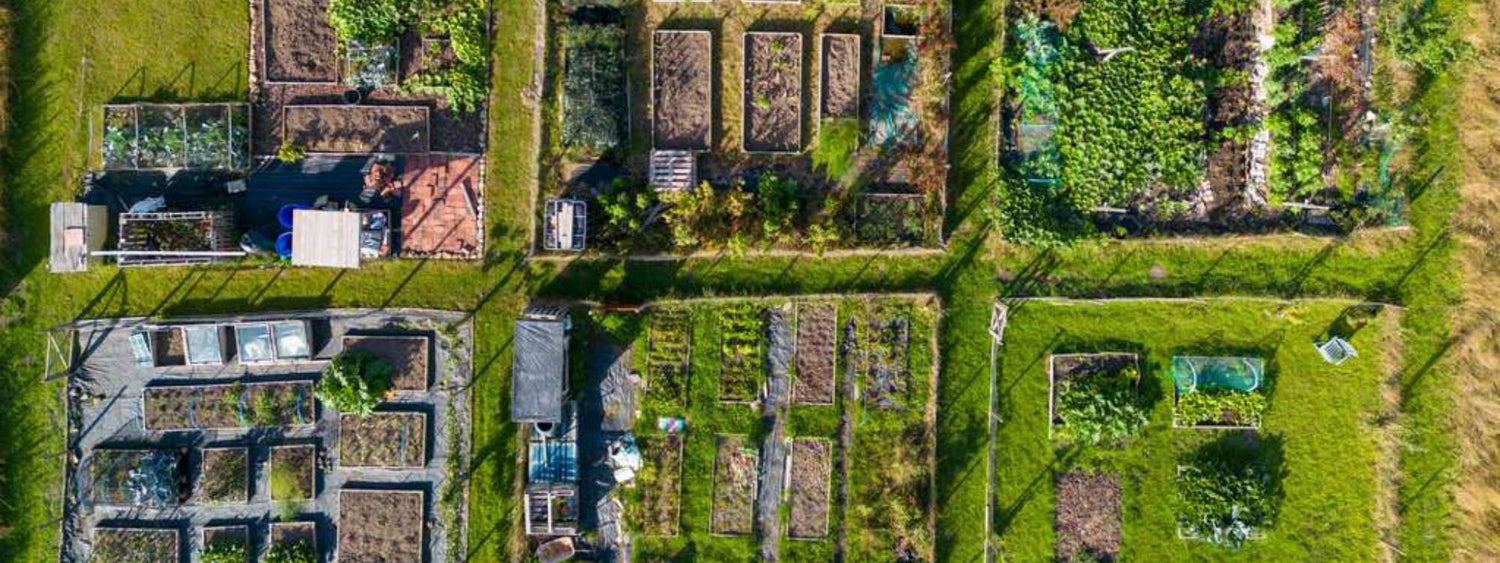
Most of us don't start with a master plan. We start with one bed.
Close to the house.
Somewhere sunny.
Somewhere convenient.
Then one bed turns into two.
Two turns into...well. You know.
I used to be very "go with the flow" about layout.
If there was space, I filled it.
After a few seasons, I realized something: Layout isn't about making it look impressive. It's about making it easy to live with. Here's what I've learned.
1. Let the Sun Lead
Before you measure anything, watch your yard.
Where is the sun at 10am? At 2pm? At 5pm?
Most vegetables need 6–8 hours of direct sun. If you tuck your beds into partial shade, you'll spend the whole summer wondering why your tomatoes look slightly disappointed. South-facing is ideal in most backyards. Watch out for fences, garages, or big trees that throw long afternoon shadows.
The sun decides more than we do.
2. Layout Ideas by Backyard Size
Every yard is different. But function always wins.
Small Backyard (1–4 Beds)
When space is tight:
Place beds along the longest sunny edge
Leave at least 3 feet to comfortably walk around
Think about your wheelbarrow width now, not later
Keep beds 3–4 feet wide max
If placing near a wall, a 2-foot wide bed is much easier to manage
In small spaces, vertical growing makes a huge difference. Trellises free up ground space without adding more beds.
Small gardens thrive on simplicity.
Medium Yard (6–10 Beds)
This is where layout gets fun. You can mix bed sizes. Create symmetry. Try L-shapes or parallel rows. But spacing becomes critical. Leave room for:
A wheelbarrow
A compost bin
A hose that can reach everything
Future you will appreciate walking space more than squeezing in "just one more bed."
Design should serve your weekly routine—not just your spring excitement.

Large Backyard (Room to Grow—and Stay)
When space isn't the issue, organization is. Create zones:
Growing zone
Compost area
Tool storage
Seating space
Let's talk about seating.
I've seen beautiful backyards packed with vegetables, fruit trees, flowers—and nowhere to sit. For years, mine was like that too. Productive. Impressive. Busy. But something shifted when I added a simple bench at the edge of the beds.
Now I can sit with my morning coffee. Or step outside in the evening and just watch the light change. If there's a small side table for two mugs? Even better.
Suddenly the garden isn't just a growing space.
It's a living space. Planting and pausing start to blend together. And that's when the backyard becomes magnetic.
If you're adding a greenhouse or seed-starting area, place it:
Close to water
Near power (if using heat mats or grow lights)
Protected from strong winds
With good winter sun exposure
For larger gardens, aim for 3-foot or wider paths. Moving mulch, compost, and soil becomes part of your life. Make it easier on yourself.
Symmetry can look beautiful. Function comes first. Always.
3. Plan Your Paths Like You Mean It
Paths aren't an afterthought. Bare dirt turns to mud in wet climates. Grass paths mean constant mowing. What's worked best for me:
Wood chips
Gravel
Stepping stones with mulch around them
They reduce weeds. Keep shoes cleaner. And feel intentional.
Good paths quietly support everything else.
4. Think About Water Early
Water planning saves more frustration than almost anything else. Dragging 100 feet of hose around beds gets old fast. If you plan to install drip irrigation later, leave space for tubing access. Make sure your farthest bed can realistically reach water. Good layout saves time every single week. Gardening is a weekly relationship.
5. The Layout Mistake I Made
I didn't leave enough space between beds at first. Two feet sounded generous. It was not. By mid-season, zucchini leaves were invading the walkway and I was shimmying sideways with a watering can like I was in some kind of gardening obstacle course.
Now I leave breathing room. The garden feels calmer. And so do I.

There is no perfect layout.
Your yard.
Your sun.
Your budget.
Your energy level.
But here's what I've learned:
If it's easy to move through, you'll use it more. And a garden that's easy to use becomes part of your life—not another project on your list. That's the goal.
Not perfection.
Flow.
You may also enjoy these related blogs:
Raised Bed Garden Planning: Size, Height, and Layout—Explained Simply
4 Smart Choices for Successful Sustainable Gardening
Beyond Bigger: Design a Garden That Actually Serves Your Lifestyle


Leave a comment
This site is protected by hCaptcha and the hCaptcha Privacy Policy and Terms of Service apply.